For learners and employers
How to check if a CPD certificate is genuine
Published 21 October 2026 · 7 min read
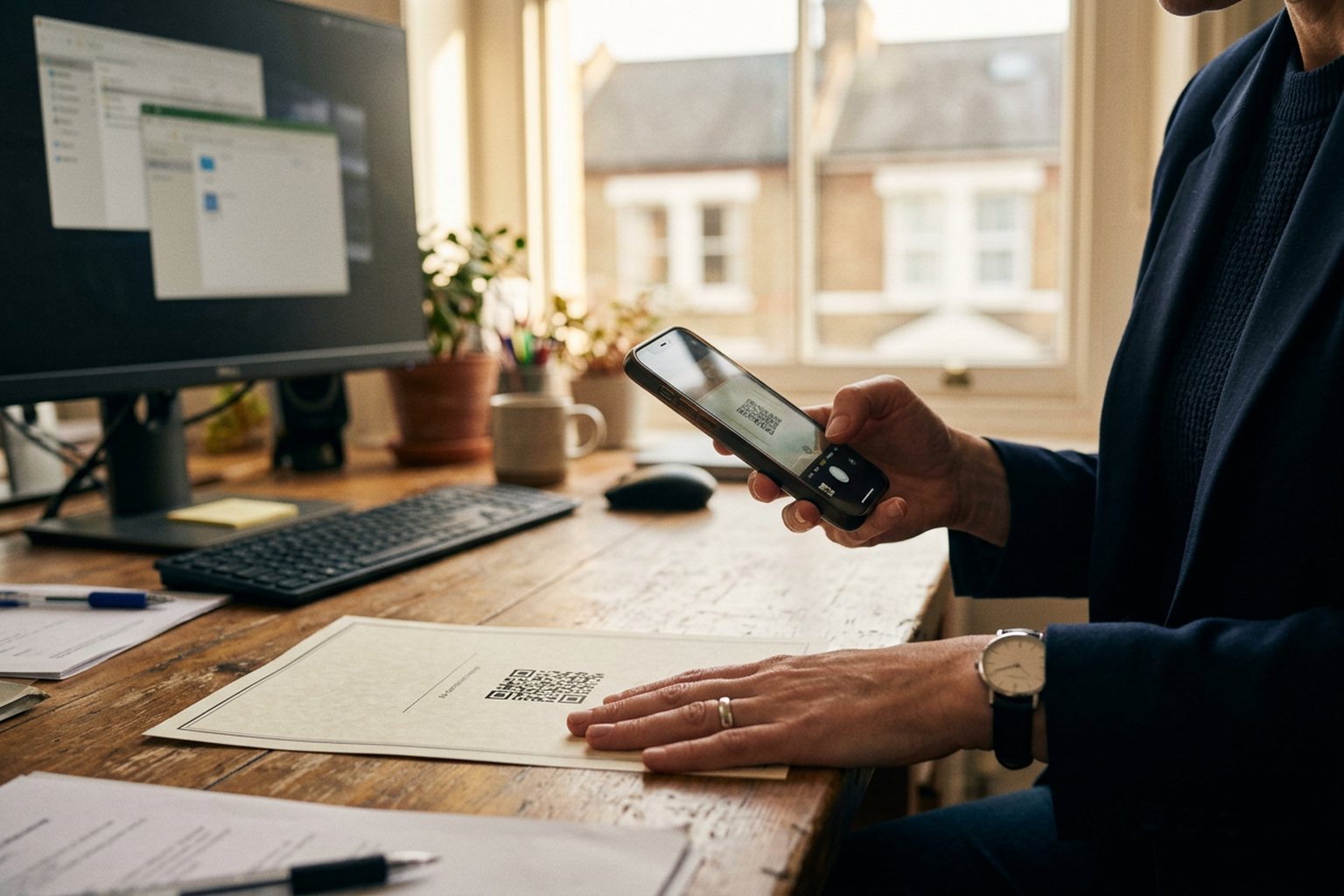
CPD certificates are easy to produce and easy to embellish. A logo, a course title and a date can be put on a page by anyone with a word processor, and “CPD accredited” is not a protected phrase. So whether you are an employer checking a new hire's training, a professional confirming your own record will stand up, or a buyer deciding whether a course is what it claims — it is worth knowing how to tell a genuine accreditation from decoration.
The short answer: a genuine CPD accreditation can be checked independently, without contacting the person who issued it. Look for a verification reference or QR code on the certificate, go to the accrediting body's verification page, and enter the code. If it resolves to a named provider or course with matching dates, it is real. If there is no way to check it at all, the certificate proves nothing on its own — however official it looks.
The quickest check: scan or enter the code
A credible accreditation body gives every accredited course or provider a unique reference, printed on the certificate, that anyone can confirm on a public verification page. On an AssuredCPD certificate, for example, that is a code and a QR code linking to assuredcpd.co.uk/verify. Scanning the QR, or typing the code into the verification page, returns the record the body holds — the accredited provider, the course where applicable, and the validity dates.
Two outcomes matter. If it resolves to a record that matches the certificate in front of you, the accreditation is genuine and current. If it returns “no match”, or there is no verification route at all, treat the certificate as unverified — which is not the same as fake, but means you are trusting the paper rather than the body behind it.
What a genuine verification actually shows
This is the part most people get wrong, so it is worth being precise. Verifying an accreditation confirms something specific and narrower than most assume.
| Verification confirms | Verification does NOT confirm |
|---|---|
| The course or provider is genuinely accredited by that body | That this particular individual sat and passed the course |
| The accreditation is current, not lapsed | The quality of the teaching beyond the body's standard |
| The CPD hours the body assessed | That the hours suit your own regulator's rules |
| Which organisation stands behind the mark | That your professional body “approves” the course |
The distinction in the first row is the important one. Most CPD accreditation operates at course or provider level — the body accredits the course, and the training provider issues individual certificates to learners who complete it. So a verification tells you the course is real and accredited; whether a named person genuinely completed it is something the provider confirms, not the accreditor. If you need to confirm an individual's completion, ask the training provider, not the accreditation body.
Five signs a certificate may not be what it claims
- No verification route of any kind. No code, no QR, no “verify at” link, and nothing on the accreditor's site to check against. The single biggest tell. A body whose whole value is trust will always make its marks checkable.
- The code doesn't resolve. A reference is printed, but entering it returns no match. Worth a second try for typos, then a question to the provider — a genuine record should be findable.
- “Approved by” a regulator. A certificate claiming it is “NMC approved”, “CQC approved”, “HSE approved” or similar. UK regulators and professional bodies do not approve external CPD courses, so this wording is a red flag in itself — see what a provider can and can't claim.
- “Accredited” with no named body. The word appears but no organisation is named, or the “body” has no website, no published standard and no verification page. Accreditation is only as good as the accreditor; an anonymous one is worth nothing.
- Regulated-qualification language on a CPD certificate. “Level 3 qualification”, “Ofqual” or “RQF” wording on something sold as CPD. CPD is not a regulated qualification, and mixing the two is either a misunderstanding or a misrepresentation.

What to do if a certificate won't verify
A failed check is not proof of fraud. Work through it in order:
- Re-enter the code carefully. Zero versus the letter O, and 1 versus I, cause most false failures. Many bodies deliberately leave ambiguous characters out of their codes for this reason.
- Check you are on the right body's site. The certificate names the accreditor; verify on that body's page, not a search result that looks similar.
- Consider timing. A very recently issued certificate may not yet be in the record, and a lapsed accreditation will show as expired rather than matching. Both are informative.
- Ask the issuer. Contact the training provider named on the certificate and ask them to confirm the reference. A legitimate provider will do so without fuss.
- Ask the accreditor. If the provider cannot help, the accreditation body can confirm whether that reference was ever issued.
If none of that resolves it — no working code, no responsive provider, no record at the named body — you are looking at a certificate that cannot be substantiated, and should be treated accordingly.
For employers checking a candidate's training
If you are relying on CPD certificates in hiring or compliance, build the check into the process rather than taking the document at face value. Two minutes with the verification page settles most questions, and it is far cheaper than discovering later that a safety-critical course was never actually accredited.
Keep the distinction in mind: verification confirms the course is accredited. To confirm this candidate completed it, ask for the provider's own record or the learner's login to the course platform. The accreditation and the completion are two separate assurances, and a thorough check wants both.
Why checkability is the whole point
A certificate you cannot verify is, functionally, just a nicely formatted claim. What turns it into evidence is the ability of a third party — an auditor, an employer, a professional body — to confirm it without taking anyone's word for it. That is exactly why a serious accreditation body builds verification in, gives every accreditation a unique reference, and keeps a public record anyone can check.
When you are assessing any CPD certificate, that is the question underneath all the others: can I confirm this independently? If yes, the rest follows. If no, no amount of logos, borders or official-looking wording makes up for it.
Common questions
How do I check if a CPD certificate is genuine?
Find the verification reference or QR code on the certificate, go to the accrediting body's verification page, and enter the code. If it resolves to a record that matches the certificate, the accreditation is genuine. On an AssuredCPD certificate, scan the QR or enter the code at assuredcpd.co.uk/verify. If there is no way to check it independently, the certificate cannot be substantiated on its own.
Does verifying a certificate prove the person completed the course?
Not usually. Most CPD accreditation is at course or provider level, so verification confirms the course is genuinely accredited and current, not that a particular individual sat and passed it. To confirm an individual's completion, ask the training provider that issued the certificate, which holds the learner records.
What does it mean if a CPD certificate won't verify?
Not necessarily that it is fake. Re-enter the code in case of a typo, confirm you are on the correct accreditor's website, and consider timing, as a very new certificate may not yet be recorded and a lapsed accreditation will show as expired. If it still will not verify, ask the training provider to confirm the reference, then the accreditation body. A reference that no one can confirm cannot be substantiated.
Can a CPD course be approved by a regulator like the NMC or HSE?
No. UK regulators and professional bodies such as the NMC, HCPC, GDC and HSE do not approve, endorse or pre-authorise external CPD courses. A certificate claiming to be regulator-approved is misdescribed, which is a warning sign in itself.
Is an impressive-looking certificate enough on its own?
No. Logos, borders and official wording can be added by anyone, and 'CPD accredited' is not a protected phrase. What makes a certificate trustworthy is a named accrediting body, a published standard, and a reference a third party can verify independently, not how the document looks.
How can an employer verify a job candidate's CPD certificate?
Use the accrediting body's public verification page with the code on the certificate to confirm the course is genuinely accredited, and separately ask the training provider for their record to confirm the candidate completed it. The two checks answer different questions and a thorough process uses both.